










Spark™

Clear Aligner System designed for the needs of orthodontists

Spark™

Spark™ Junior

Clear aligner treatment tailored for kid and teen patients

Spark™ Junior

Spark™ Retainers

Designed to keep great smiles

Spark™ Retainers

EtchFree™ bonding

Bond smarter, protect better

EtchFree™ bonding

Damon Ultima™

The first true full expression system

Damon Ultima™

Ormco™ Digital Bonding

Digitally powered clinical excellence

Ormco™ Digital Bonding

Symetri™

Advanced clear bracket with refined strength and aesthetics

Symetri™

Dexis™ IOS

Intraoral Scanners

Dexis™ IOS

Brackets

Quality and value in each bracket we develop.

Brackets

Damon System

For all the ways you want to treat

Damon System

Archwires

High-quality archwires to deliver consistent, predictable results

Archwires

BANDS & CROWNS

The latest in anatomy

BANDS & CROWNS

BUCCAL TUBES

Tubes and bands for exceptional adhesion

BUCCAL TUBES

ADHESIVES & COMPOSITES

Maximum bond strength and convenience

ADHESIVES & COMPOSITES

INTRA/EXTRA ORAL DEVICES

Design that is smart, simple and efficient

INTRA/EXTRA ORAL DEVICES

HORIZON PRODUCTS

Discover all our lines of auxiliary products

HORIZON PRODUCTS

RETENTION

Discover the latest in retainer technology to offer the best fit and maximum comfort.

RETENTION

ALL PRODUCTS

Explore all products

ALL PRODUCTS

Ormco Forum 2027

Ormco Forum 2027

Ongoing Education 2026

Ongoing Education 2026

Aligner Intensive Master

Aligner Intensive Master

Aligner Pro Academy

Aligner Pro Academy

MasterCOIP

MasterCOIP

All Courses

Explore all courses

All Courses

CASE REPORT

Deep bite and impacted canine: A mastered challenge

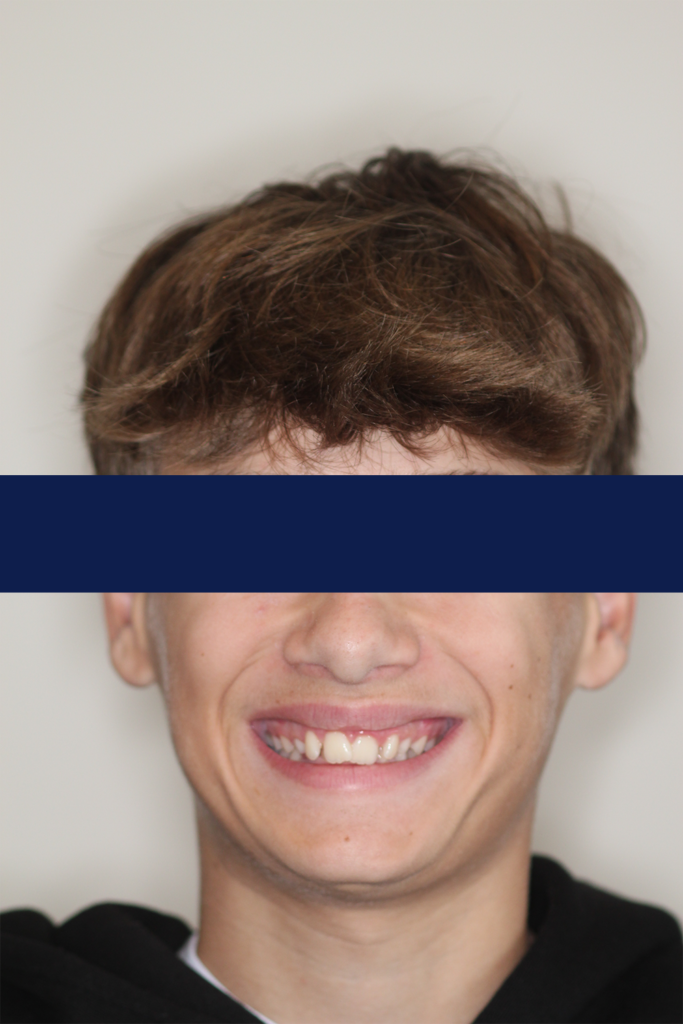
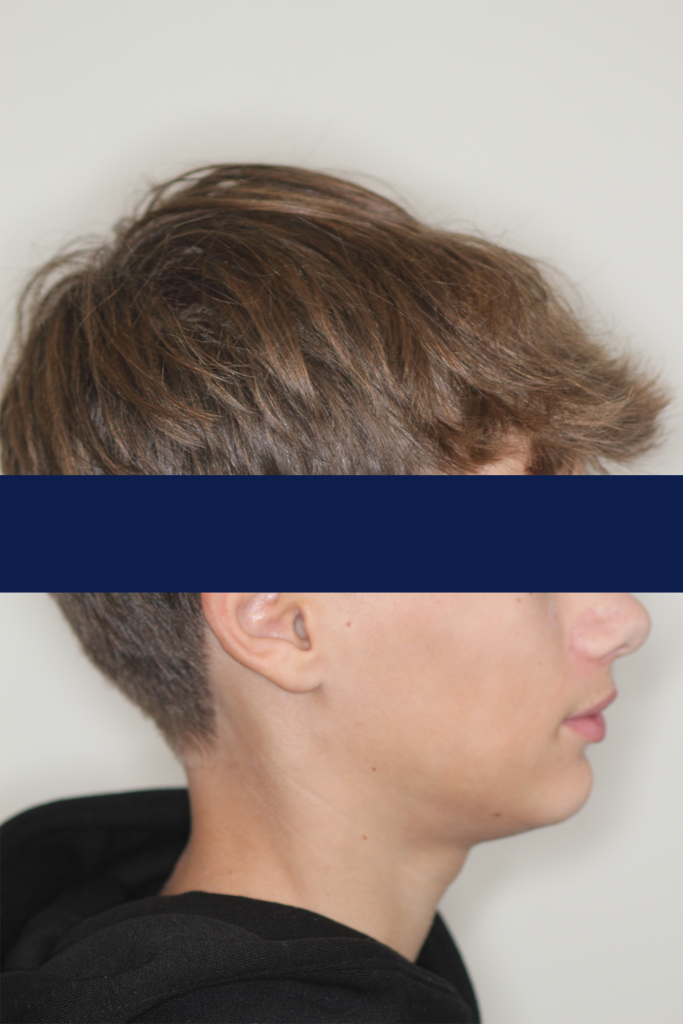
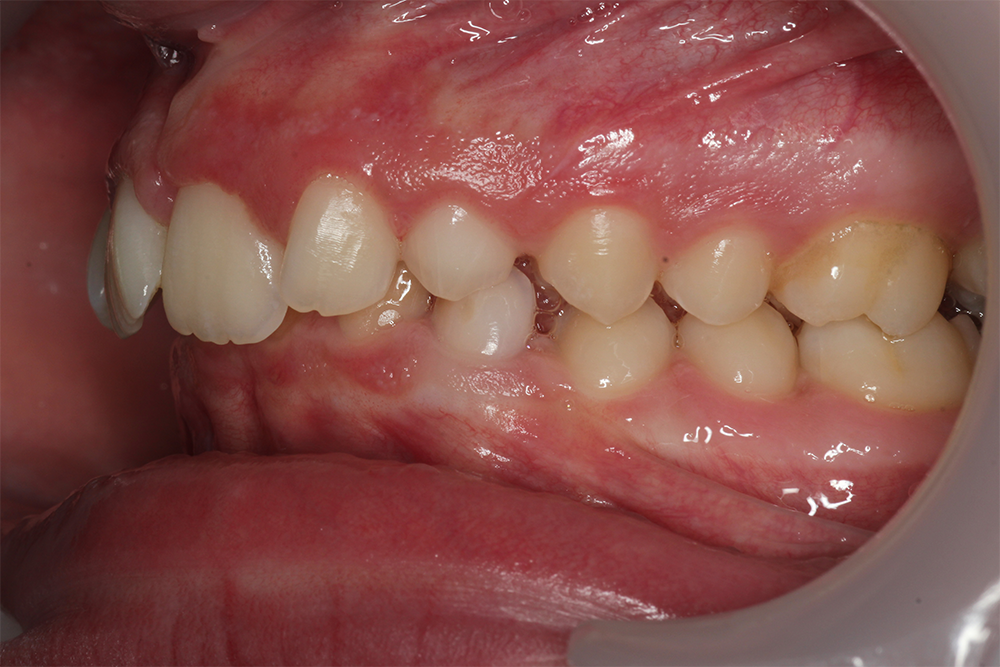
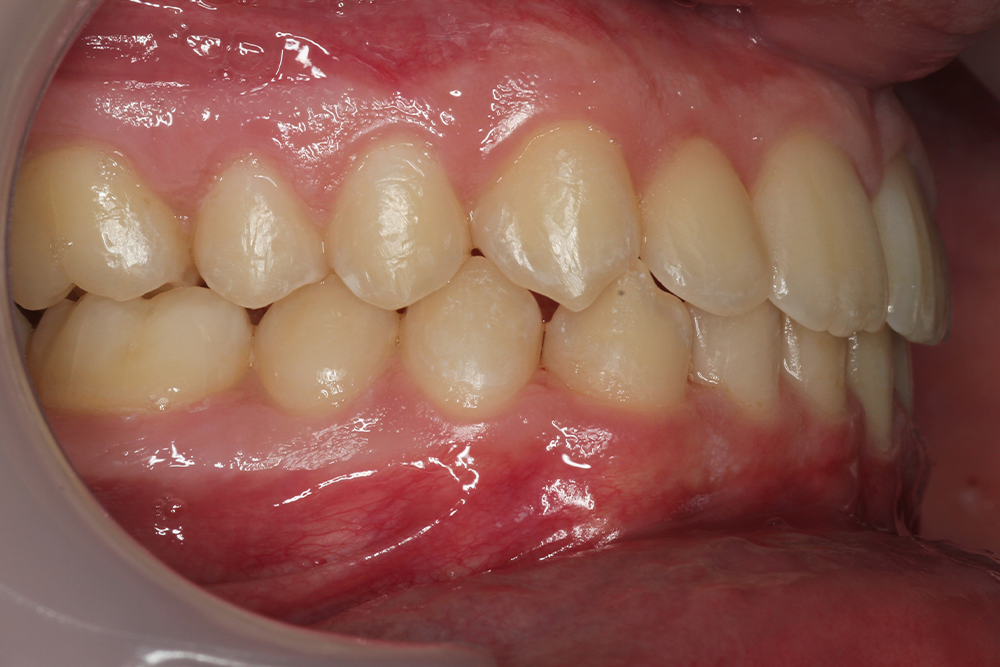
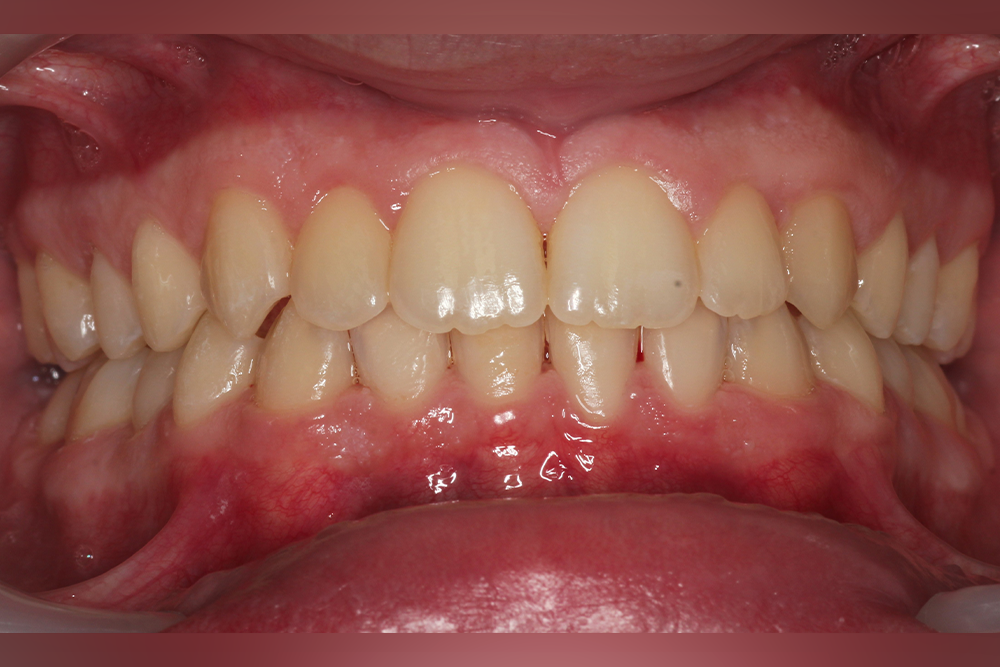
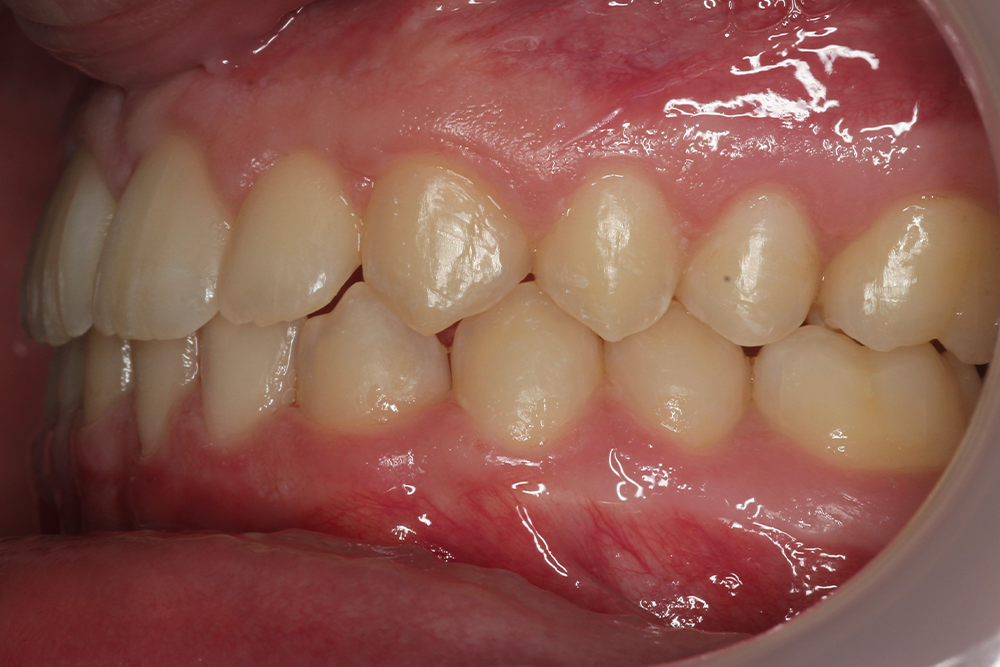
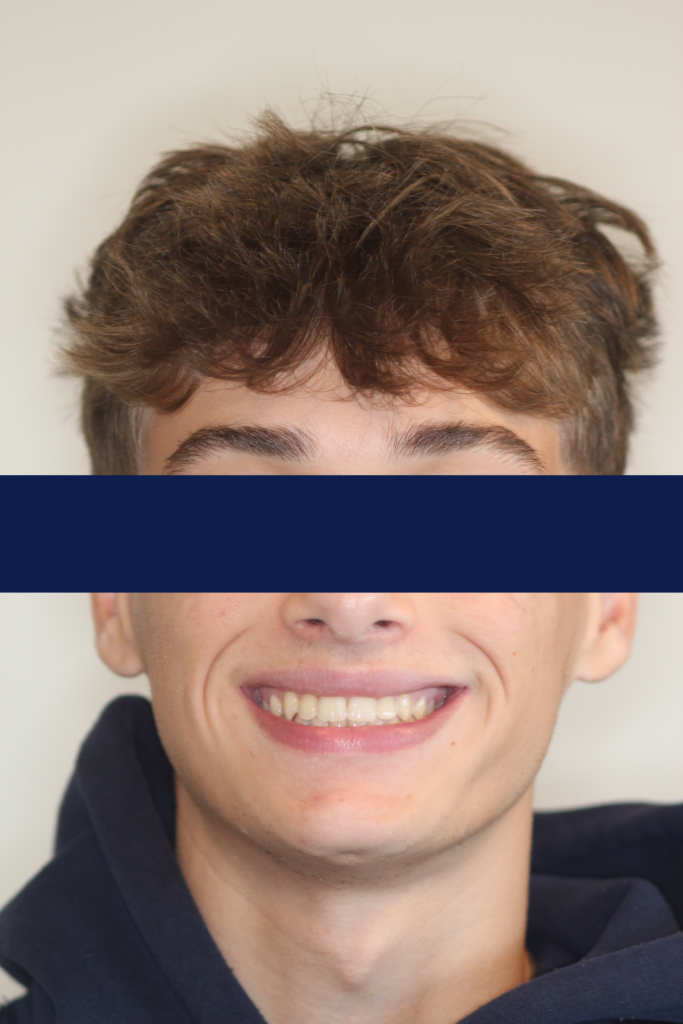
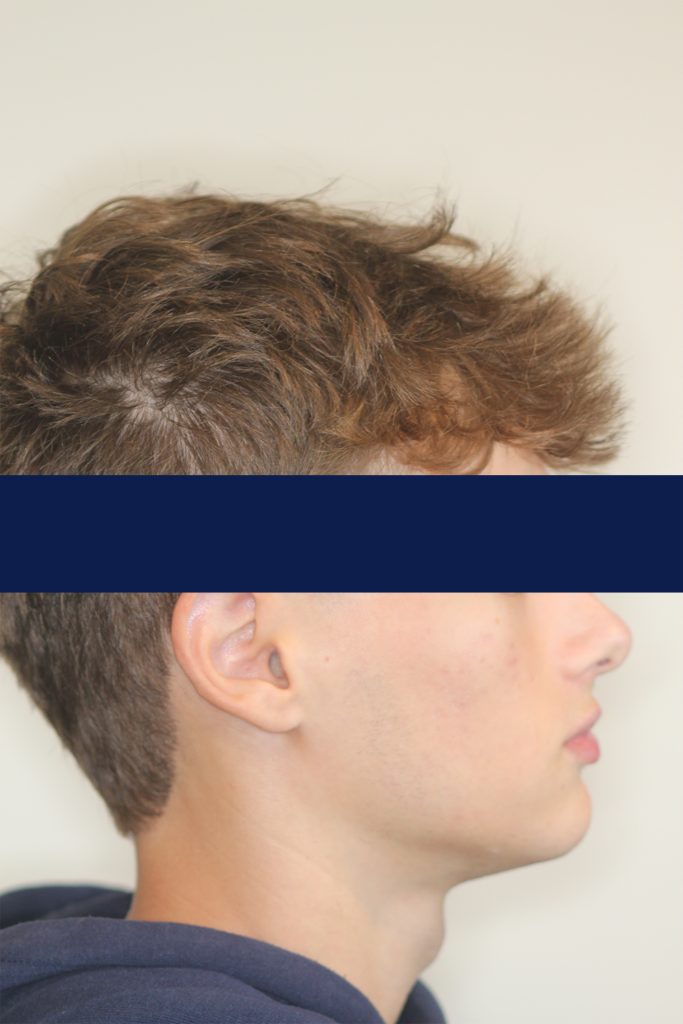
This article describes the treatment of a 14-and-a-half-year-old adolescent hockey player with a skeletal Class II relationship, a severe deep bite, and an impacted maxillary canine, managed using the Spark™ Clear Aligner System.
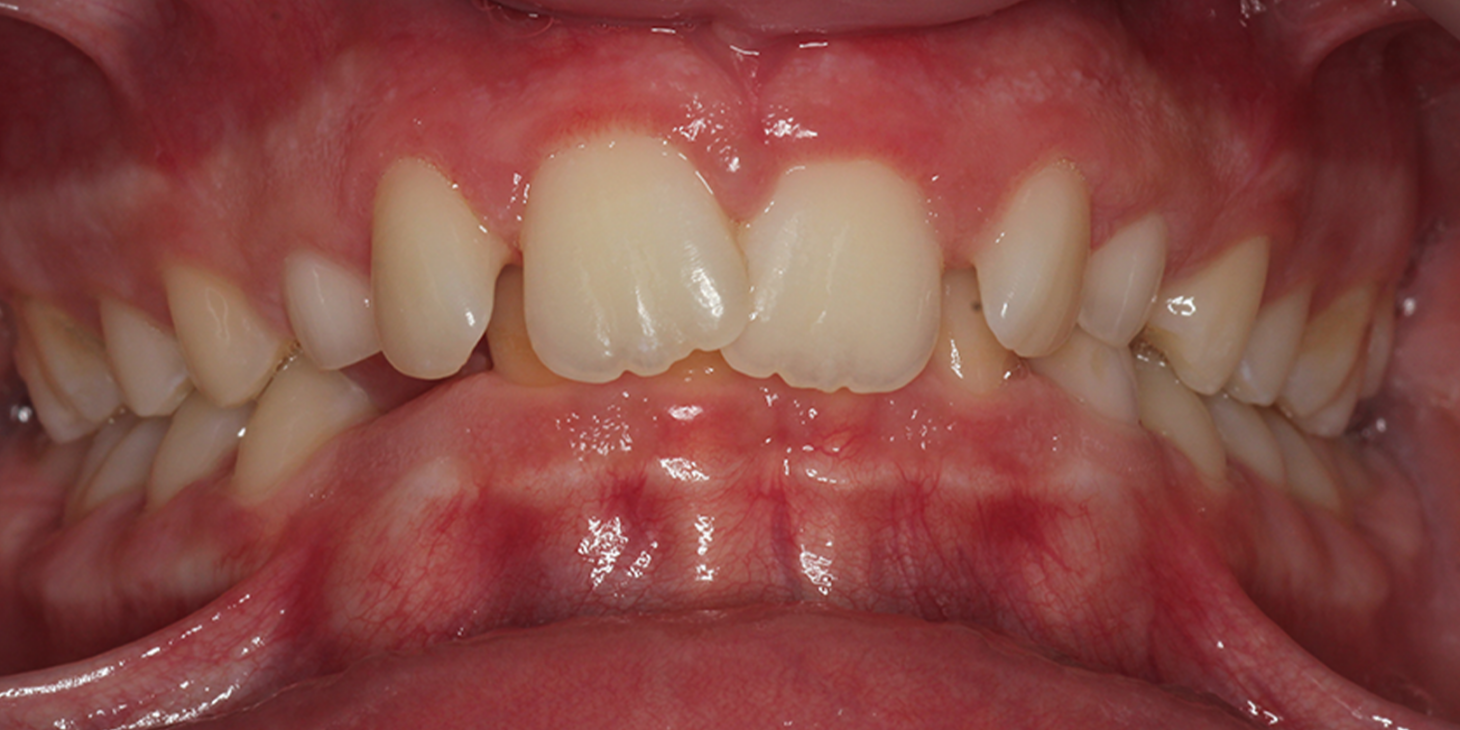
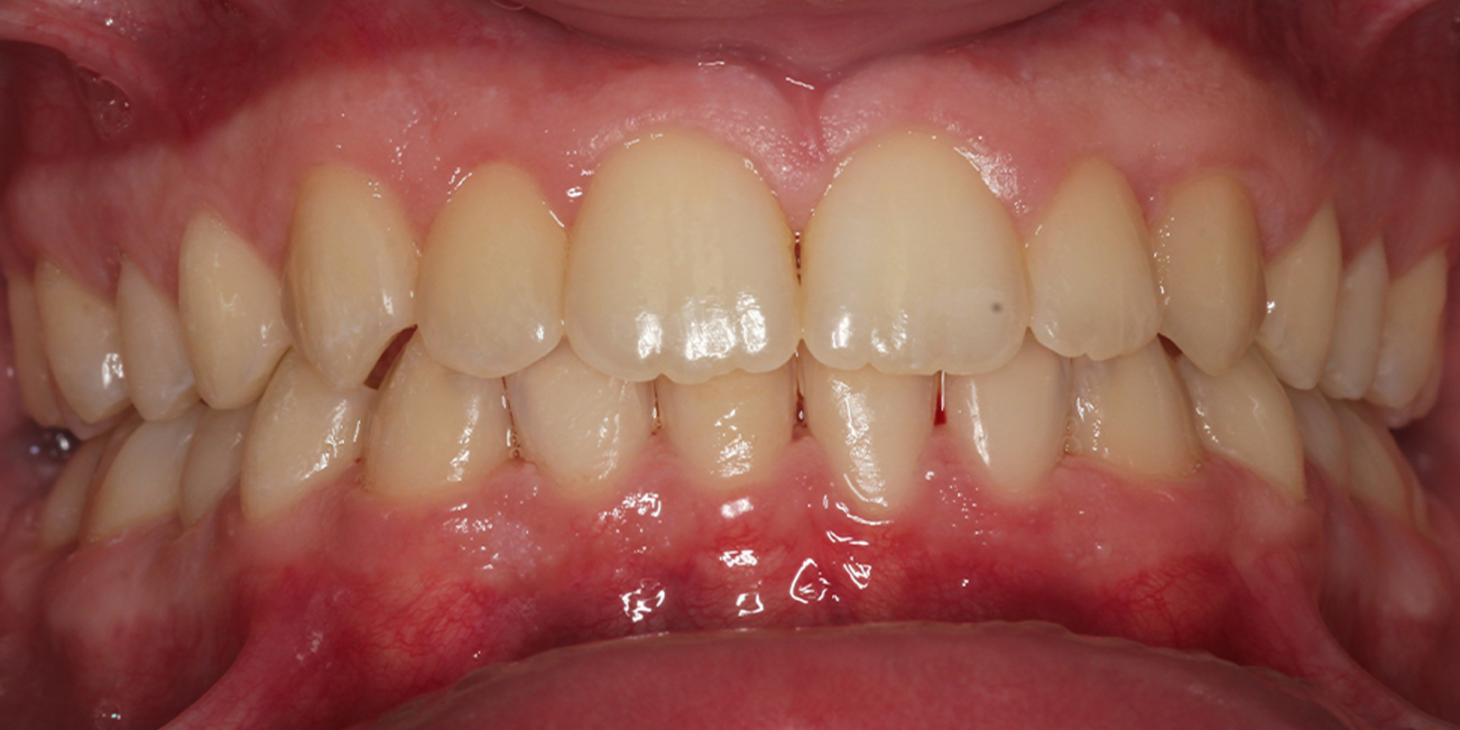
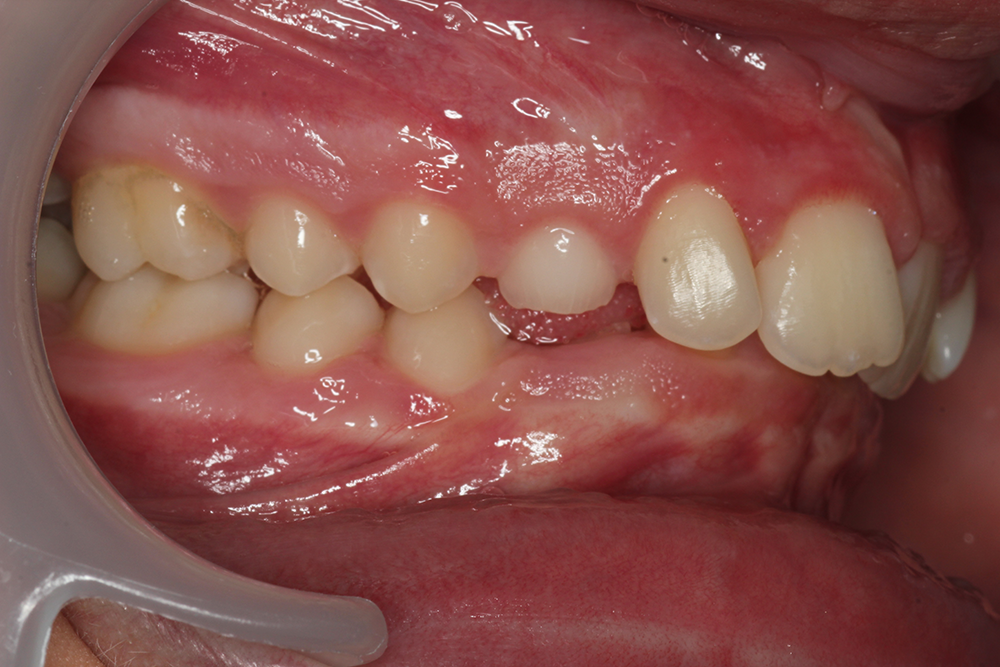
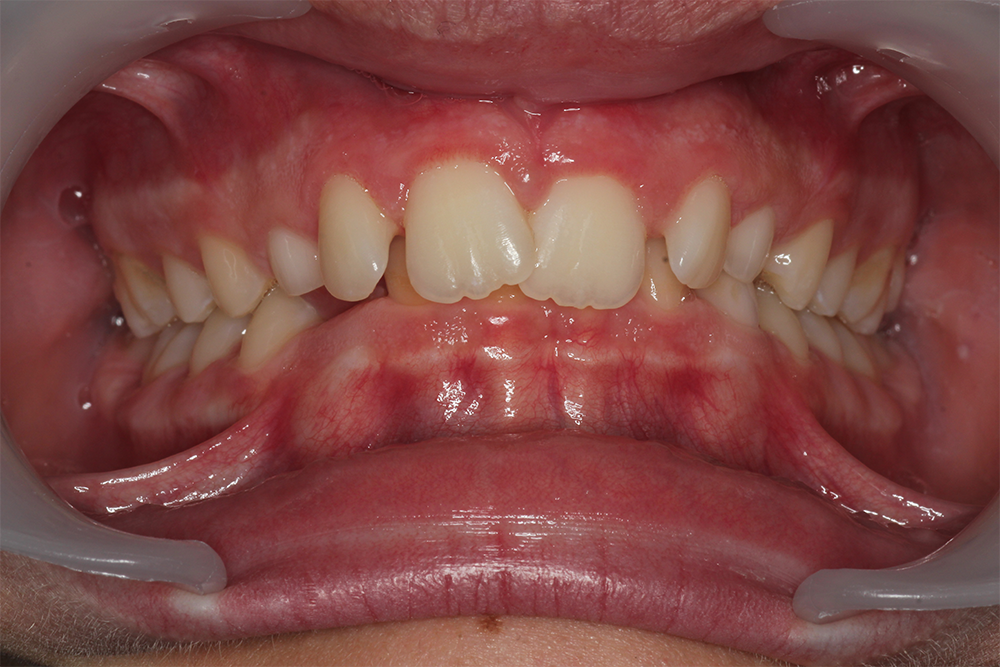
BEFORE
AFTER

Ready to elevate your practice?

Dr. Julie Daube*, Belgium

Dr. Julie Daube graduated in Dental Sciences from the Catholic University of Louvain in 1994. She completed extensive training in orthodontics and dentofacial orthopedics, including the CISCO program in Ypres (Belgium), where she was introduced to Ricketts’ technique and the bioprogressive functional philosophy.

Dedicated to restoring orofacial functional balance, she consistently aims to achieve facial harmony in her treatments. She obtained her Specialist qualification in Orthodontics in 2007.

After many years in private practice, Dr. Daube transitioned to digital orthodontics in 2021 and has worked with the Spark system for the past two years. She values the platform’s intuitive interface, clinical support, and high predictability of movements when carefully planned.

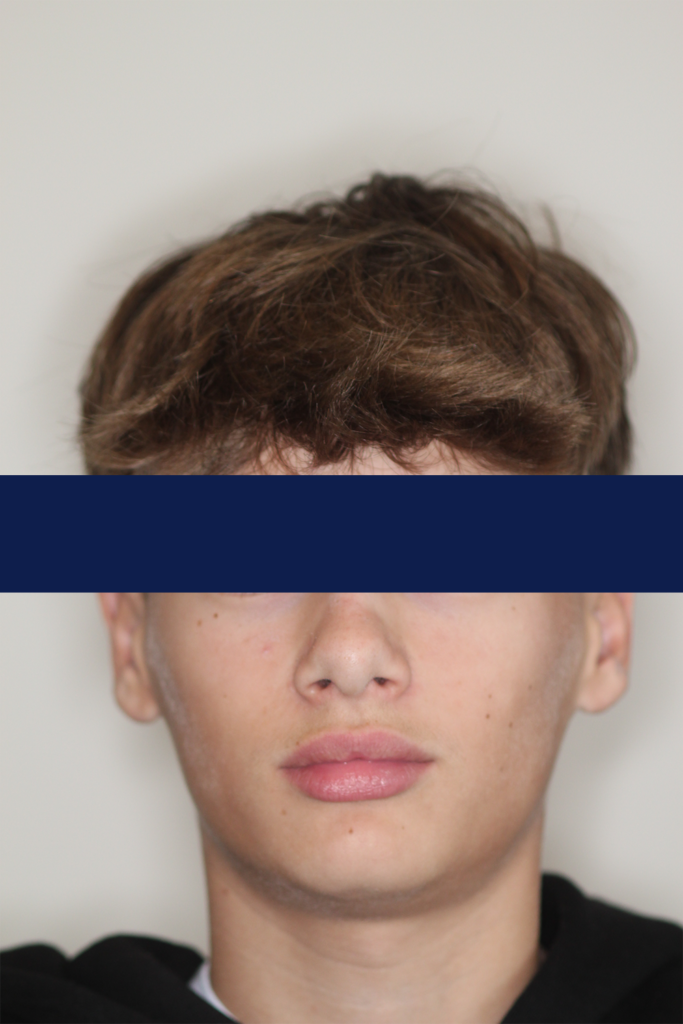
Diagnosis

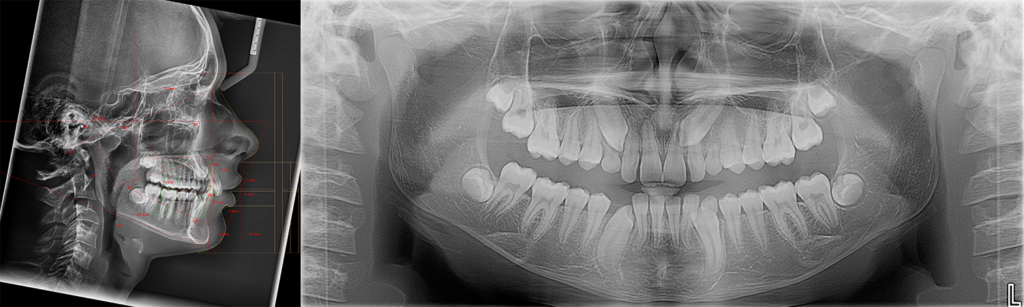
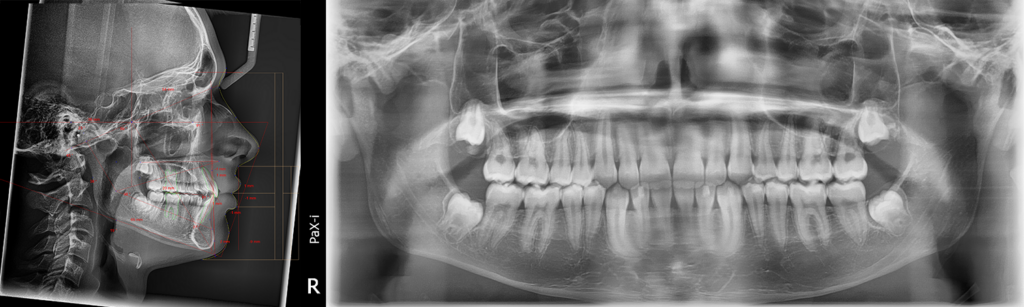
  • Asymmetric skeletal Class II associated with mandibular retrognathia and a hypodivergent facial pattern. The mandible shows a 2 mm deviation to the left relative to the facial midline
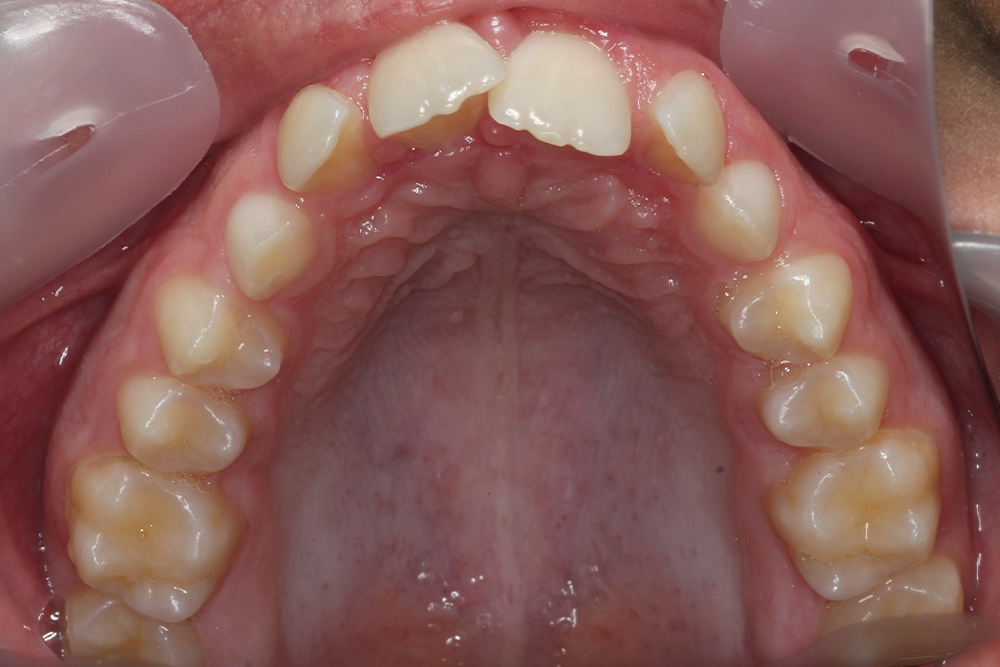
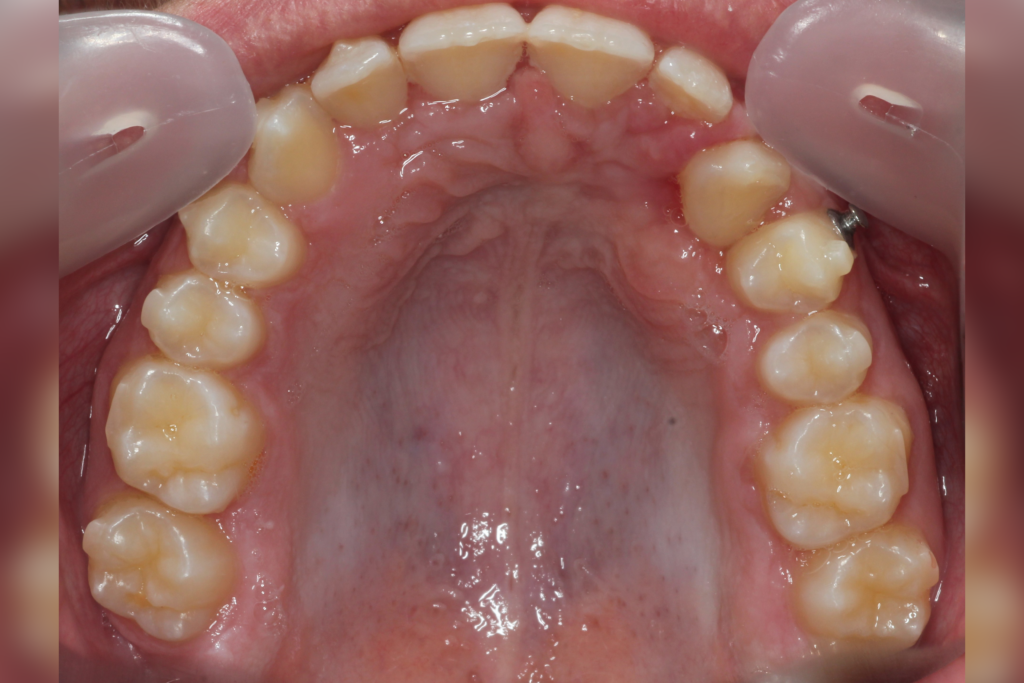
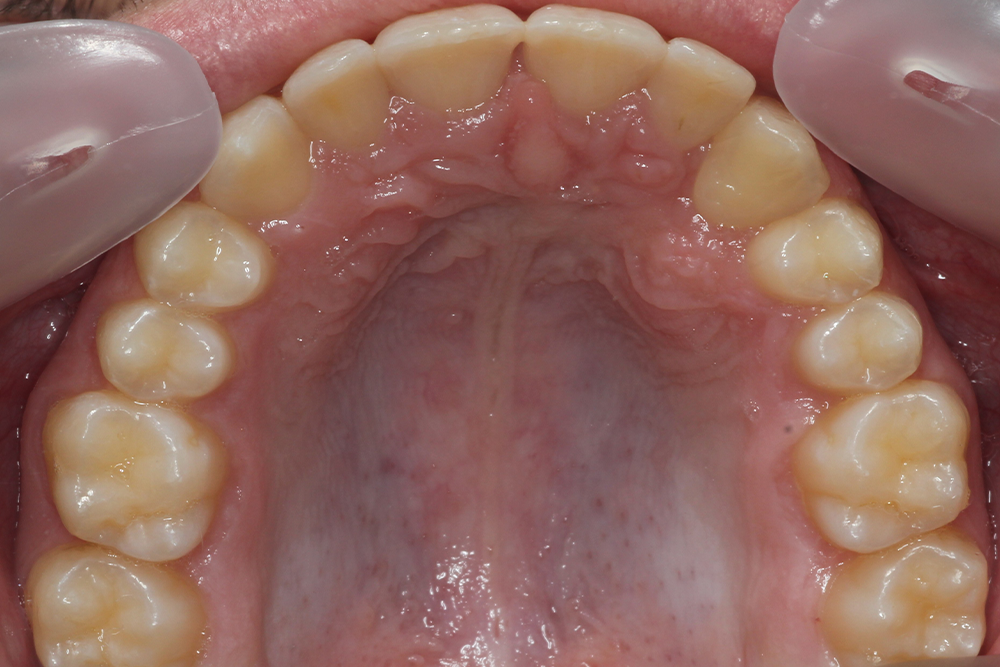
  • Maxillary endo‑alveolar constriction, with a narrow V‑shaped maxillary arch. The maxillary incisors exhibit palatal inclination, with crowding between teeth 11 and 21, while teeth 16 and 26 show mesio‑palatal rotation
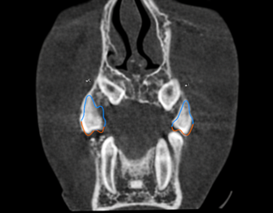
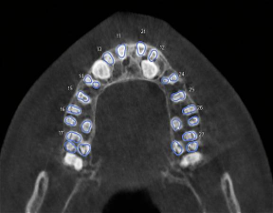
  • Persistence of the primary canines associated with retention of the permanent canines. Tooth 23 is impacted in a palatal position, located near the mid‑palatal suture
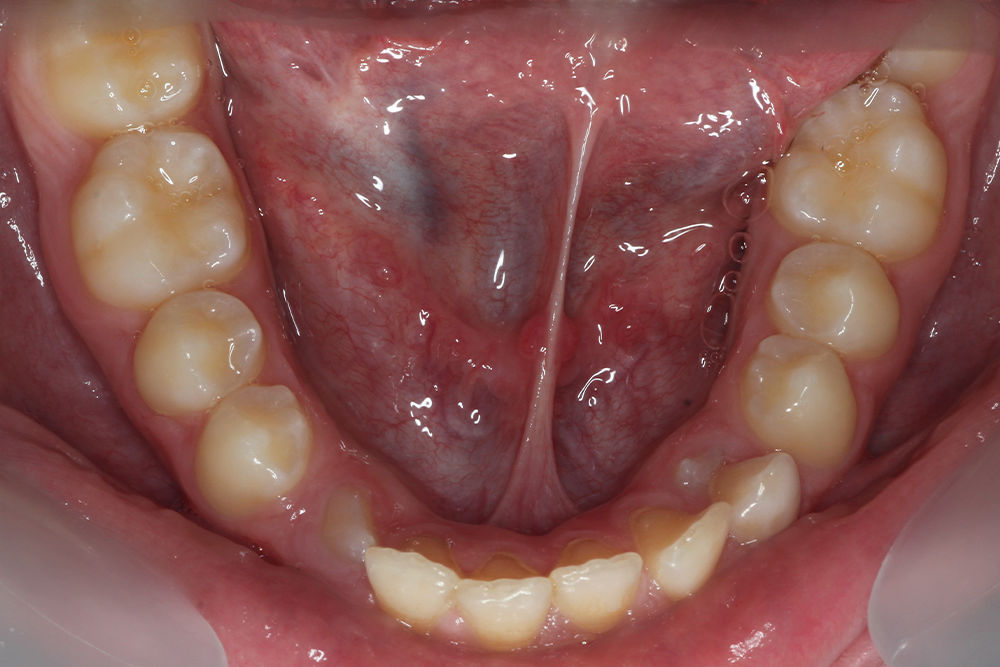
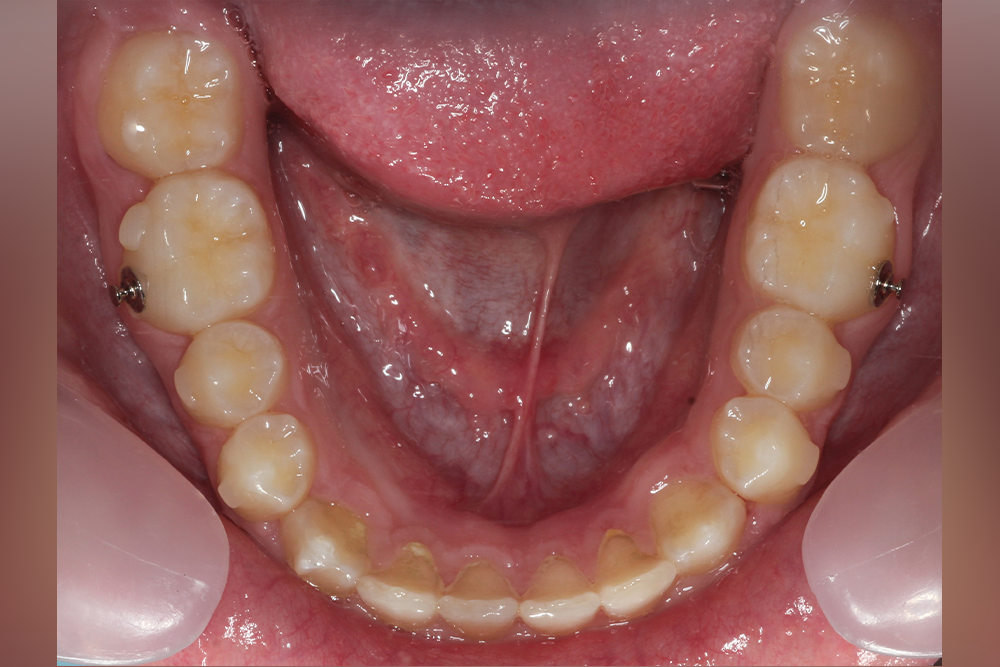
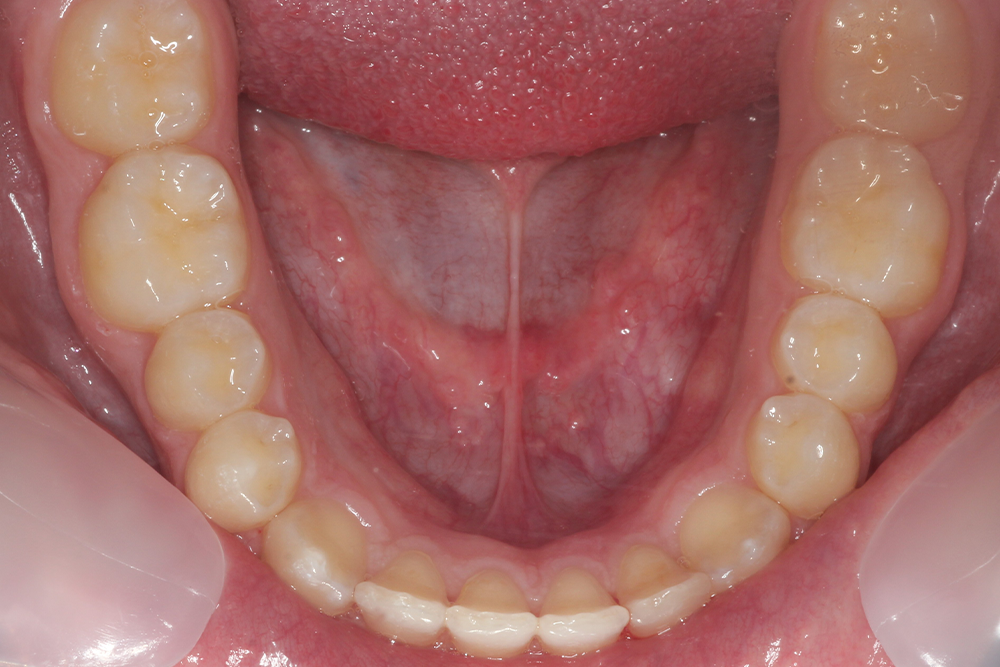
  • Mandibular endo‑alveolar constriction associated with an accentuated curve of Spee
  • Asymmetric Class II canine and molar relationship, with a severe 8 mm deep bite and a 4 mm overjet
  • Mixed breathing pattern, with good sleep quality despite the presence of snoring.

Treatment objectives

  • Correction of the Class II relationship through sequential distalization following the 50% protocol
  • Alignment of the anterior segment using the Esthetic Start protocol
  • Use of Class II elastics combined with a 2 mm mandibular advancement (mandibular jump) to support correction of the sagittal discrepancy
  • Leveling of the curve of Spee according to the PIR protocol, achieved through intrusion of the maxillary and mandibular incisors and controlled extrusion of the posterior segments.

Spark Approver planning


Primary phase

  • Material: TruGEN™
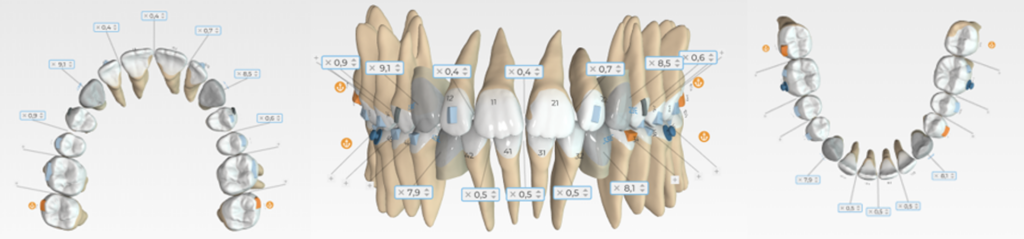
  • The initial treatment phase includes 20 active aligners in both the maxillary and mandibular arches, with the objective of sequencing the different stages of treatment
  • The remaining primary teeth 53, 63, and 73 were extracted, and tooth 23 underwent surgical exposure.

Maxillary arch

  • Expansion
  • Derotation with mesial‑out rotation of the first molars
  • Sequential distalization at 50%
  • Eruption guides for the canines.

Mandibular arch

  • Incisor protrusion combined with en-masse intrusion.
  • At this stage, teeth 33 and 43 had not yet erupted and were positioned lingually. A manual GE adjustment was performed to create the necessary space and guide their eruption.
  • Mandibular midline correction through an asymmetric antero‑posterior jump, combined with asymmetric Class II elastics.

The first two aligners were worn for 10 days each to allow the patient to gradually adapt to aligner wear. Subsequent aligners were then changed every 7 days. Class II elastics (4.5 oz) were prescribed for 14 hours per day.

This initial 6‑month treatment phase aimed to improve arch form and incisor alignment, initiate the correction of the Class II relationship and the deep bite, level the curve of Spee, and facilitate the eruption of the permanent canines.
Refinements

First refinement  (8 months)

  • Material: TruGEN™.
  • Number of aligners: 30 active aligners in the maxillary arch and 18 in the mandibular arch.
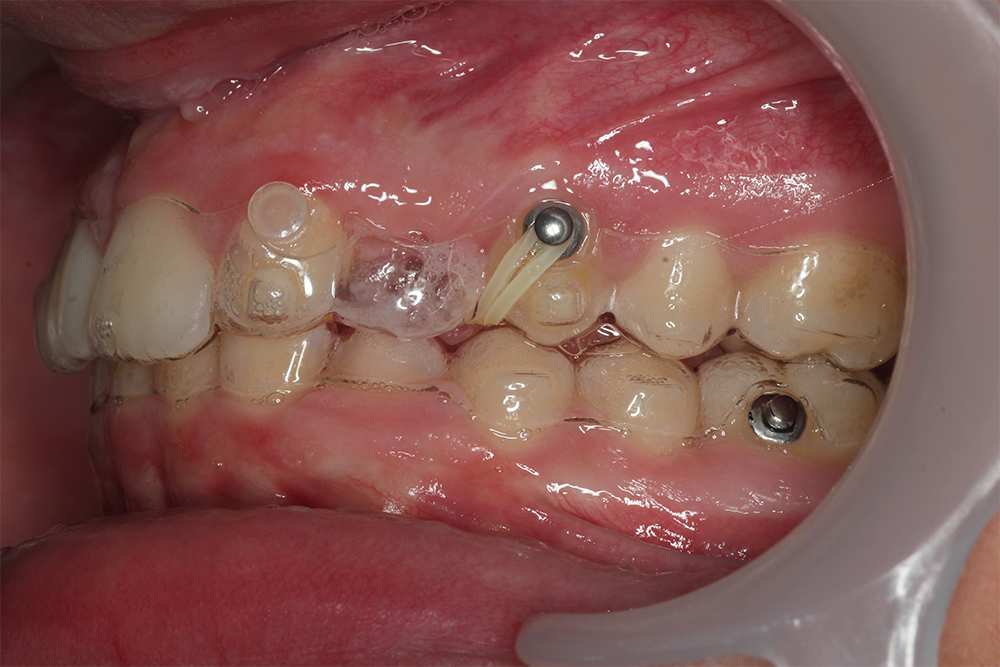
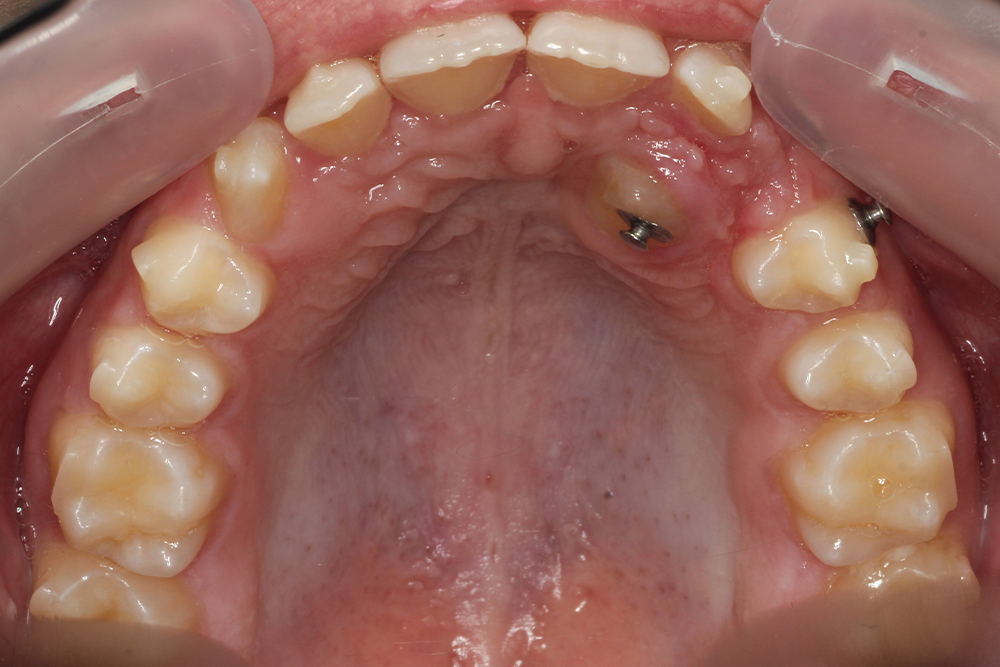
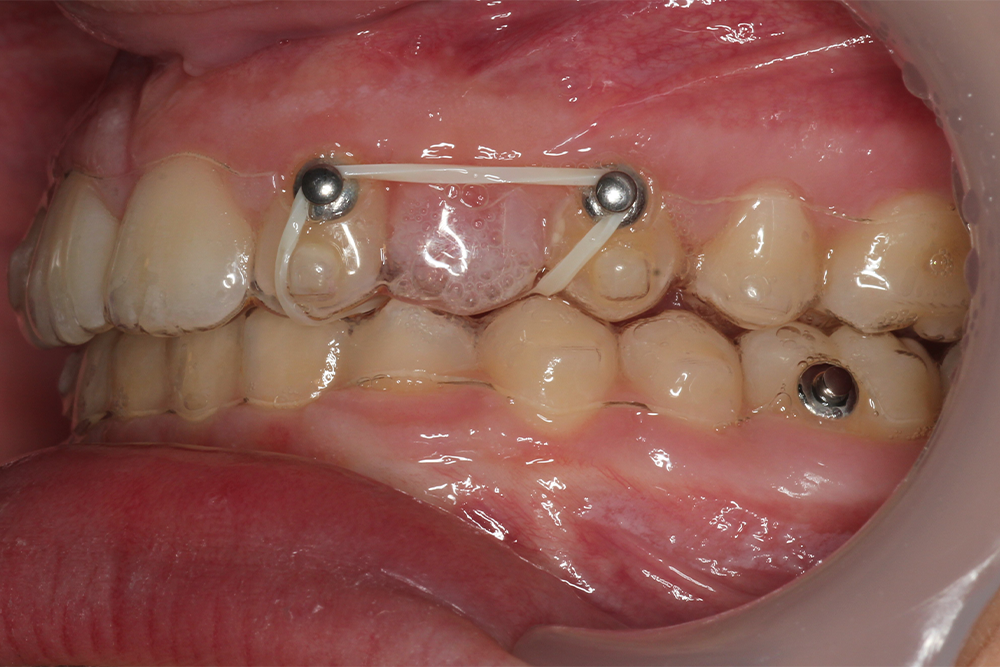
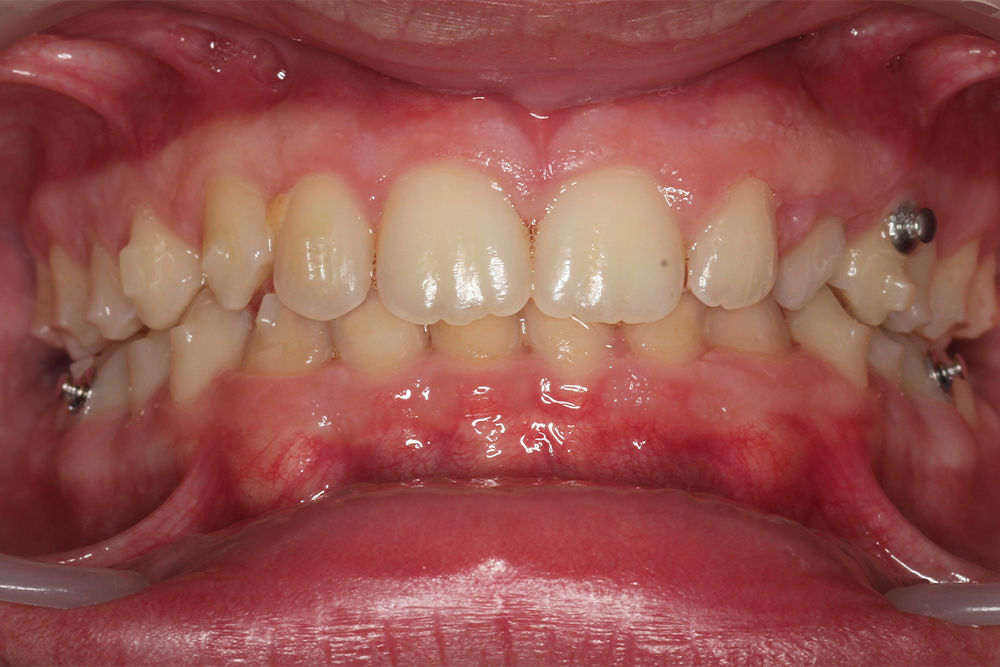
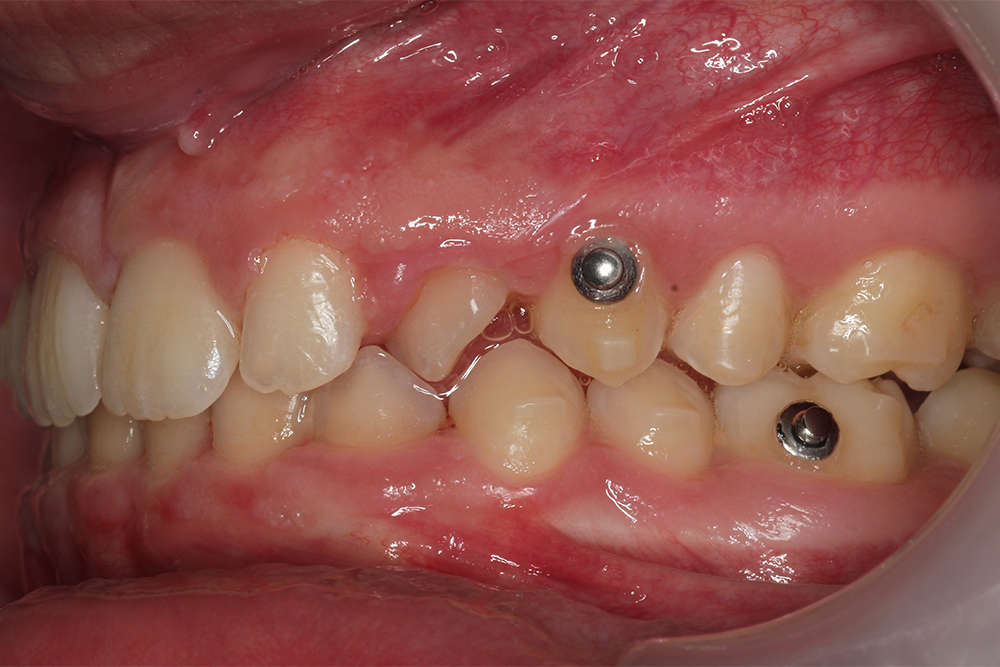
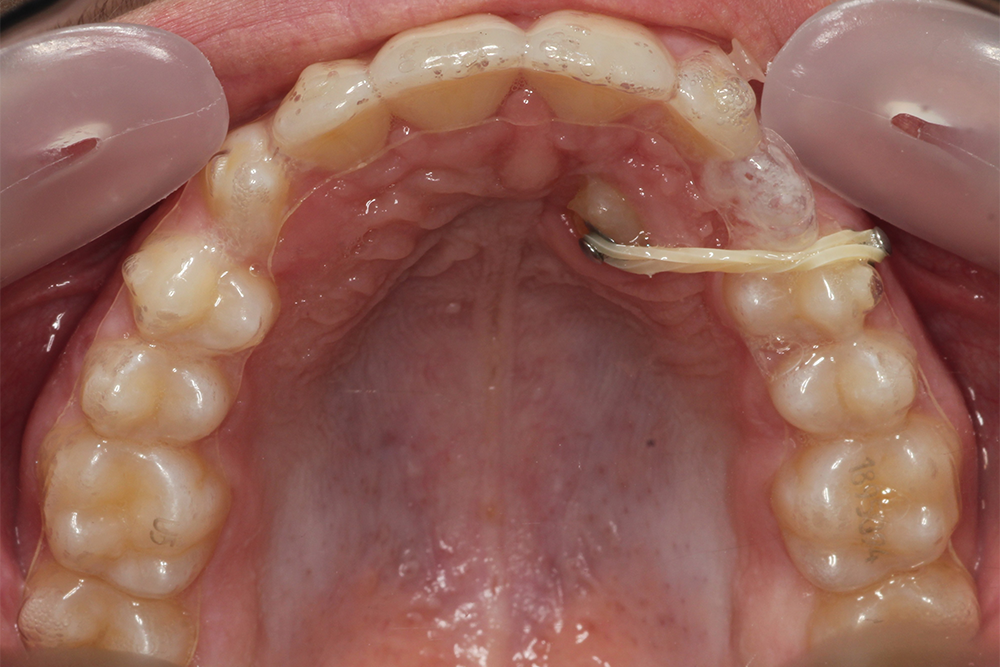
  • Placement of vestibular buttons on teeth 22 and 24 to enable traction of tooth 23 (Fig. A).
  • Integration of teeth 13, 33, and 43 into the aligners.
  • Continuation of Class II correction through 50% sequential distalization.
  • Continuation of deep‑bite correction and leveling of the curve of Spee.
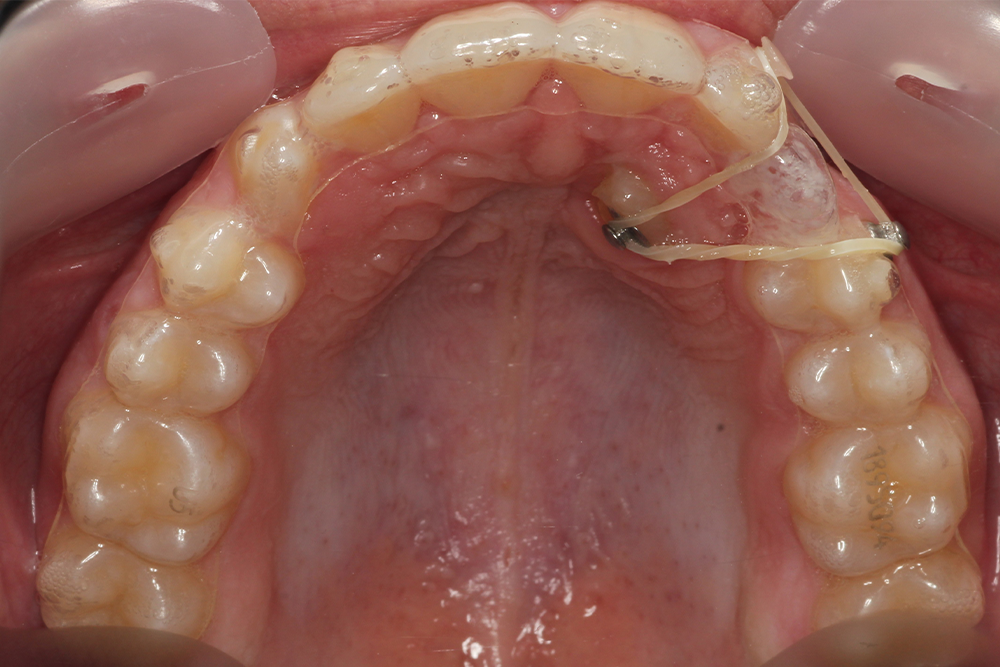
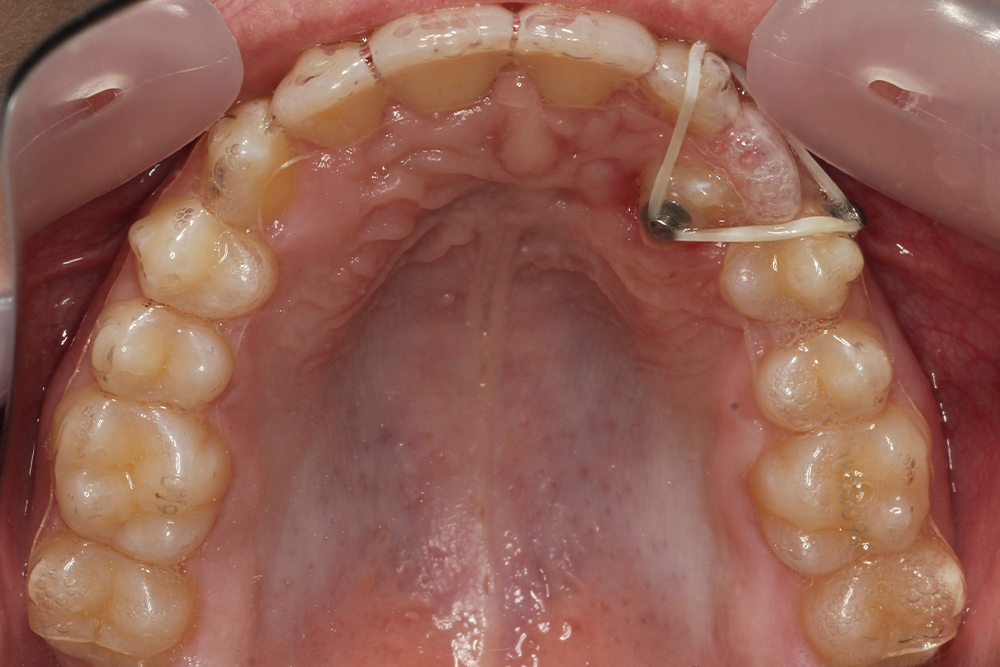
  • Traction of tooth 23: a button was bonded to the accessible palatal surface of tooth 23, connected by an elastic to a vestibular button placed on 24.
  • At this stage, distalization of tooth 24 had not yet begun, as it was maintained as an anchorage unit for canine traction. This mechanics allowed initial vestibular and distal movement of tooth 23.
  • To allow tooth 23 sufficient time to progress toward its position in the arch while preserving anchorage on 24, the aligner change interval was extended to 15 days.
  • Distalization of tooth 24 could resume once 23 was fully integrated into the aligner.
  • Once tooth 23 was sufficiently distalized, traction could be continued using a triangular elastic anchored to teeth 22 and 24 to guide its final positioning in the arch (Fig. B).
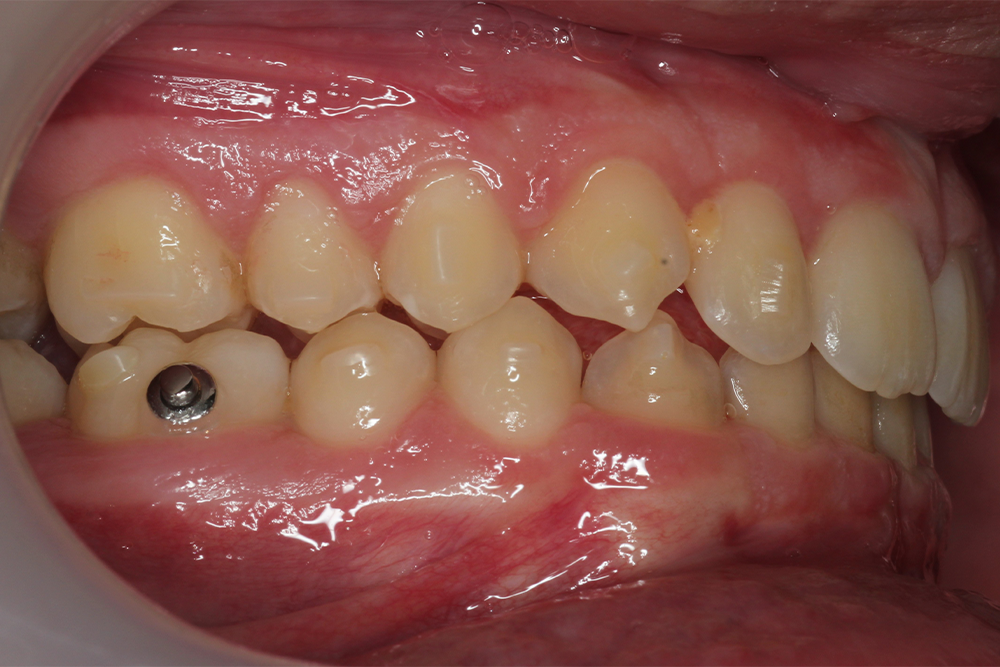
  • The button was repositioned in the center of tooth 23 to continue traction and avoid the unwanted rotational effect caused by the initial distal button placement (Fig. C).
Fig (A)
Fig (A)
Fig (B)
Fig (C)
Fig (C)
Fig (C)

Results of the first refinement

  • The Class II molar relationship was corrected through sequential distalization, combined with a favorable pattern of mandibular growth. The midlines are now centered.
  • The deep bite was partially corrected.
  • Tooth 23 has re-entered its eruption pathway and can now be integrated into the aligner.

Second refinement (10 months)

  • Material: TruGEN™ XR.
  • Correction of the position and axial inclination of tooth 23, with the addition of a palatal attachment to optimize its control
  • The use of chewies was recommended at each aligner insertion, particularly around tooth 23, to ensure optimal seating of the aligner
  • Continuation of deep bite correction by programming reinforced posterior contacts on the maxillary palatal cusps
  • At the end of this phase, the horizontal overjet and vertical overbite were restored to physiological values
  • It should be noted that the hyperplastic gingival tissue underwent spontaneous resorption during the course of treatment, without the need for periodontal surgery.


Third refinement (5 months)

  • Material: TruGEN™ XR
  • Number of aligners: 24 active aligners in the maxillary arch and 10 in the mandibular arch
  • Adjustment: finalization of the root-axis correction of tooth 23, combining derotation with overcorrected buccal torque to optimize its three-dimensional positioning.

Post-treatment photos

Discussion

The success of a case of this complexity relies on the precise definition of the objectives for each therapeutic phase and on the rigorous sequencing of orthodontic movements to enhance overall predictability. Traction of the impacted canine was performed using teeth maintained as anchorage units, thereby avoiding interference with the sequential distalization of the posterior segment and eliminating the need for skeletal anchorage with mini‑screws.

At the end of treatment, occlusal stability will be ensured through nighttime wear of retention trays in both arches. The potential need to complement this retention with a bonded canine‑to‑canine retainer will be reassessed after several months of follow‑up.

Finally, the patient’s excellent compliance with aligner and elastic wear, as well as the regular use of chewies, played a key role in the successful outcome of the treatment.

Conclusion

This case highlights the value and predictability of treatment with Spark Clear Aligners in correcting a Class II malocclusion associated with a severe deep bite, as well as in guiding the eruption and alignment of an impacted maxillary canine in an adolescent patient.

Are you ready to elevate your practice?

* Dr. Julie Daube is a paid consultant for Ormco. The opinions expressed are those of Dr. Julie Daube. Ormco a is a medical device manufacturer and does not dispense medical advice. Clinicians should use their own professional judgment intreating their patients.

MKT-26-1549

Get in contact with us